4×4 Winch Installation: The Definitive Guide for Secure Mounting and Reliable Self-Recovery
A winch is undoubtedly one of the most essential pieces of self-recovery equipment for any serious off-roader. It serves as your ultimate backup when momentum, traction, and luck are no longer on your side. However, incorrect installation can result in significant equipment failure, while improper usage can cause severe injuries or even fatalities. A winch is a powerful tool that commands careful handling and respect.
This detailed guide provides everything you need to know—from selecting the right winch and securely mounting it to mastering the key steps of safe recovery—ensuring you’re fully equipped to handle challenges when the trail pushes back.
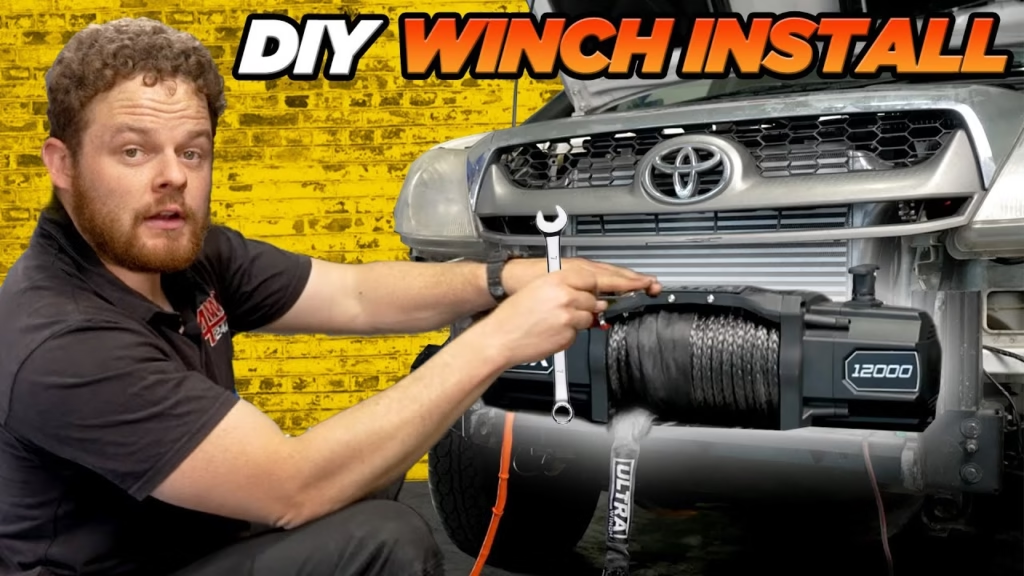
Phase 1: Choosing the Right Winch (Winch Selection Criteria)
Before starting the installation process, it’s essential to select a winch that aligns with your vehicle’s requirements.
1. Calculating Winch Capacity
The primary factor in winch selection is its pulling capacity. To ensure optimal performance, the winch’s rated line pull should be at least 1.5 times your vehicle’s Gross Vehicle Weight Rating (GVWR).
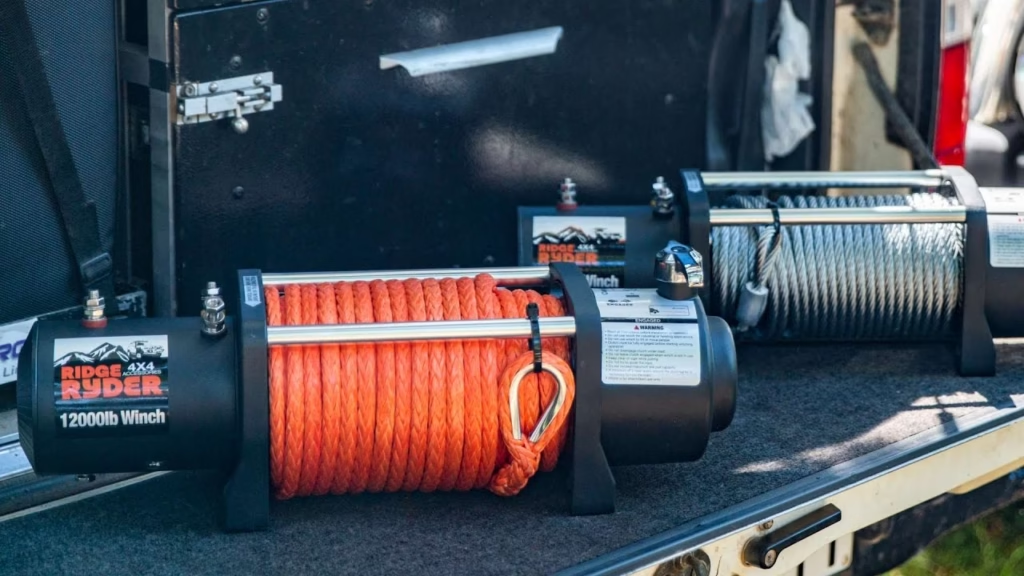
2. Synthetic Rope vs. Steel Cable
Evaluate whether synthetic rope or steel cable is better suited for your needs. Consider factors such as durability, weight, and maintenance.
| Feature | Synthetic Rope | Steel Cable |
| Weight | Very Light | Heavy |
| Safety | Safer (low kinetic energy if snapped) | Dangerous (high kinetic energy/whiplash) |
| Maintenance | Requires cleaning; sensitive to UV/Heat | Requires lubrication; prone to rust/kinks |
| Cost | Higher | Lower |
| SEO Keyword | Synthetic vs Steel Winch Rope | Best Winch for Off-Roading |
3. Electric vs. Hydraulic
Electric winches are the preferred choice for most off-road vehicles due to their straightforward installation and ease of operation. Hydraulic winches, powered by the vehicle’s power steering pump, are typically used in extreme, commercial, or military applications requiring continuous and heavy-duty performance 4×4 Winch Installation.
Phase 2: Secure 4×4 Winch Installation Steps
Ensuring a proper installation is critical to enable the winch to handle its rated load without causing damage to your bumper or vehicle frame 4×4 Winch Installation .
Step 1: Choosing the Mounting Location
Ensure your bumper is strong enough to handle the forces of a working winch. Factory (stock) bumpers are typically not designed to withstand these forces, so consider upgrading to a reinforced or aftermarket bumper designed for winch use 4×4 Winch Installation.
Step 2: Mechanical Mounting
Securely attach the winch to the mounting plate and ensure all bolts are tightened to the manufacturer’s specifications.
Step 3: Wiring and Electrical Connections
Use thick, high-quality wiring as the winch requires extremely high amperage. Follow the manufacturer’s instructions carefully to connect the winch to your vehicle’s battery and ensure all connections are secure.
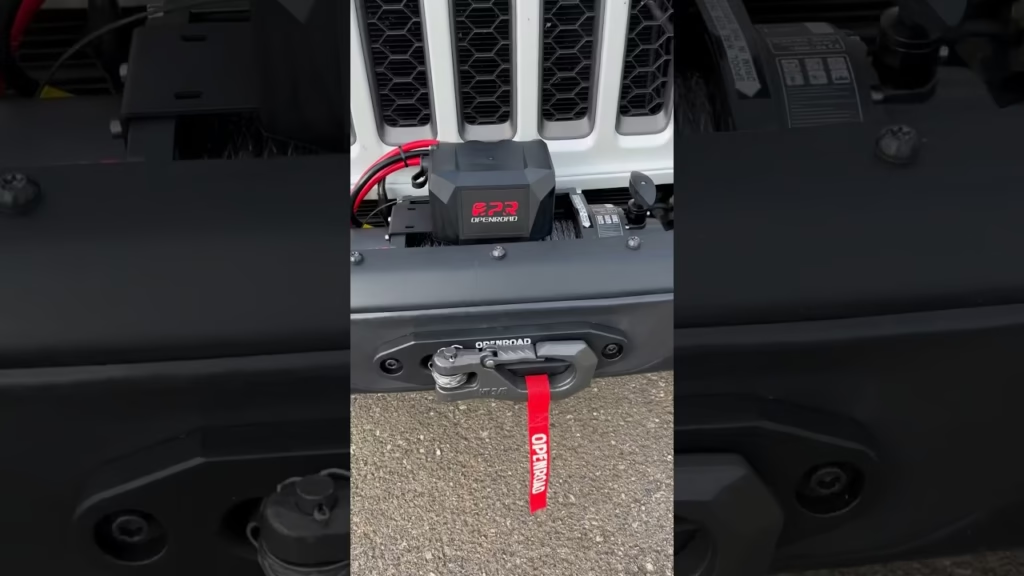
- Positive Connection (+): Attach the thick positive cable (commonly red) securely to the battery’s positive terminal 4×4 Winch Installation .
- Negative Connection (-): Attach the heavy-gauge negative cable (typically black) securely to a clean, bare metal ground spot on the vehicle’s frame or directly to the negative terminal of the battery4x4 Winch Installation.
- Cable Routing: Ensure all cables are routed clear of sharp edges, hot engine components, and moving parts such as the steering shaft. Secure them with protective sheathing and zip ties for added safety and durability 4×4 Winch Installation.
- Isolation: To improve safety, think about adding a quick-disconnect plug or a specialized high-amperage kill switch inside the cab to entirely cut power to the winch when it’s not being used 4×4 Winch Installation.
Phase 3: Safe Winch Usage and Recovery Tips
A winch is only as safe as the person operating it. Always adhere to these essential safety and operational guidelines to avoid accidents and ensure efficiency.
1. Winching Safety Rules
- Gloves: Always use sturdy leather gloves when dealing with the cable or rope.
- Dampener: Always place a Winch Line Dampener (or a heavy blanket/jacket) over the center of the cable or rope. In the event of a line snap, the dampener will absorb the kinetic energy, causing the line to fall safely to the ground.
- Engine On: Keep the engine running while using the winch to ensure maximum voltage supply to the winch motor and avoid excessive battery drain.
- Clear the Area: Keep all bystanders at a safe distance, at least 1.5 times the cable’s length, and ensure the cable’s path is completely clear.
- Use a Tree Saver: Avoid using your hands to guide the cable onto the drum when it is under tension. Always use the remote control and maintain a safe distance 4×4 Winch Installation.
- No Hand-Spooling Under Load: Do not use your hands to guide the cable onto the drum while it is under tension. Always operate it with the remote control and maintain a safe distance.
- Inspect Everything: Inspect the cable or rope, shackles, anchor points, and winch drum for any damage both before and after each pull 4×4 Winch Installation.
2. Enhancing Efficiency: The Pulley System
A winch’s power decreases as more cable layers accumulate on the drum. Additionally, if the load surpasses the winch’s capacity, it is essential to use a Snatch Block (pulley).
- Snatch Block Usage: A snatch block effectively doubles the pulling capacity of your winch—for instance, a 9,000 l b winch can handle up to 18,000 lbs. This is achieved by providing a mechanical advantage and minimizing strain on the winch motor.
- Double Line Pull: This method employs the snatch block to establish a loop, drawing the cable back towards the recovery vehicle. It is the preferred technique for substantial extractions.
Maintenance and Durability of Winch Cables (Winch Care)
Regularly check and maintain your winch cable to keep it free from frays, rust, or damage. Proper maintenance ensures your winch is always reliable when you need it most.
- Steel Cable: Regularly unspool the entire cable and check for kinks, frays, or broken wires. Lubricate the cable according to the manufacturer’s recommendations.
- Synthetic Rope: Keep the synthetic line clean. Rinse off mud and grit regularly, as trapped abrasive particles can damage the fibers from the inside out. Inspect the rope sleeve for UV damage.
- Re-spooling: Always re-spool your cable/rope under light tension (by hooking it to an anchor point and driving slowly away) to ensure tight, even layers. Uneven spooling can damage the cable and the winch motor.
Conclusion
A properly installed and well-maintained winch is an invaluable tool for any serious off-road enthusiast. By following the correct installation process and mastering essential safety practices—such as using a dampener and a snatch block—you can transform your winch into a reliable self-recovery system. Always remember, winching involves powerful forces that can cause severe harm if mishandled. Prioritize safety at all times.